Men's Harness & Engineer Boots
Men’s harness & engineer boots in this section all come from RideTecs, including 13-inch harness boots, 11- and 16-inch engineer boots and 6- to 7-inch zipper and lace boots. Sizes run from about 7 to 13, with wide widths on many styles. One harness boot is listed as waterproof, and one biker boot has reflective detailing.
Showing the single result
-

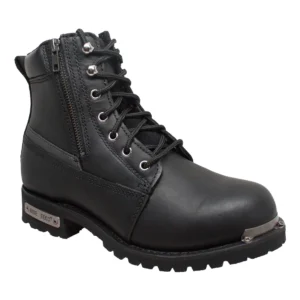
Men’s 6″ Reflective Double Zipper Biker by RideTecs
$157.00 Select options This product has multiple variants. The options may be chosen on the product page Compare
Harness and engineer boots: the leather scene staple
Few pieces of clothing say leather community as clearly as a pair of heavy harness or engineer boots. Born as motorcycle and work footwear, they were adopted by biker clubs and then by gay leathermen, and they remain the default footwear at leather bars, fetish events and pride runs. They are tough, they look serious, and many people who wear them find the weight and the creak of leather part of the appeal. This guide explains the styles, sizing quirks and how to keep a pair going for years.
Know the styles
Harness boots
Harness boots have a strap that wraps around the ankle and crosses the instep, joined by a metal ring at the outer side, plus a square or slightly rounded toe and a low, solid heel. Shaft heights vary: around 7 inches sits under jeans, while 13 inches shows above the ankle and looks bolder when worn over trousers or with leather chaps.
Engineer boots
Engineer boots are pull-on boots with a tall shaft, often 11 to 16 inches, a buckled strap across the instep and another at the top of the shaft. The top buckle lets you snug the shaft around your calf. They are the classic match for leather breeches or chaps, and a tall pair has real presence on a dance floor.
Biker boots with zips and laces
Many modern versions add side zips, double zips or lace-and-zip fronts, so you get the look of a pull-on boot without wrestling it off at the end of the night. Some also have waterproof construction or reflective trim for actual riding.
Sizing and fit
- Heavy leather boots often run slightly large or stiff, so read the size chart and note whether a style comes in wide (W) fittings; many of these do.
- Wear the socks you plan to wear with the boots when you try them on. Plan your fitting around the heavy socks you will wear, since a thick knit pair uses up roughly half a size of room inside a harness or engineer boot.
- Your heel will lift a little at first in a pull-on boot. It should settle as the sole flexes; heavy slipping means the boot is too big.
- Check the calf: tall shafts need room for your calf, plus jeans or breeches if you plan to tuck them in.
- Zip-sided styles are easier for anyone with a high instep, since pull-ons can be hard to get on.
Breaking them in
Good leather boots are stiff to begin with. Wear them around the house for a few evenings before a long night out, flex the ankles, and walk stairs. A leather conditioner applied to the creases helps them soften. Blister plasters on the heels and a thick sock in the early weeks spare you a lot of discomfort. Once broken in, the boots mold to your feet.
In the scene
Boots are central to boot worship and boot-blacking. A submissive might be tasked with cleaning, polishing and shining a dominant's boots, either as service or as part of a scene, and well-kept boots are a matter of pride in many leather circles. If your boots will be licked or kissed, clean them with a mild saddle soap first and skip strong-smelling polishes on those occasions. Heavy soles are tough on bare skin, so standing on a partner, trampling or boot pressure needs care, slow weight transfer and clear communication. Take boots off for play on beds and padded furniture to protect the upholstery.
Care and maintenance
Brush off dirt after each wear, wipe with a damp cloth, and let boots dry naturally at room temperature, never on a radiator. Condition the leather every month or two, more often if you ride in wet weather. For a mirror shine, use wax polish in thin layers and buff between coats. Use cedar boot trees or rolled newspaper to keep tall shafts upright and help them dry. Resole rather than replace when the soles wear down; a well-made boot is worth repairing.
What to wear with them
Harness and engineer boots pair naturally with a chest harness, jeans, chaps, breeches and a leather cap. Take a look at our apparel leather harnesses for the upper half of the look, and our leather accessories for armbands, belts and finishing pieces.