Men's Leather Vests
Men’s leather vests from two makers fill this section: First Manufacturing and Unik International. Styles include club vests, perforated leather, mesh and canvas versions, and cowhide with printed linings. Sizes listed run from S through 5XL on most styles, with some up to 10XL.
Showing all 45 results
-

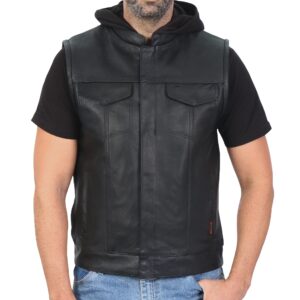
Hot Leathers Leather Vest with Hood
Price range: $149.95 through $159.95 Select options This product has multiple variants. The options may be chosen on the product page Compare -
Hot Leathers Men’s Black ’10 Pocket’ Cowhide Leather Vest VSM1018
Price range: $129.95 through $139.95 Select options This product has multiple variants. The options may be chosen on the product page Compare -
Hot Leathers Men’s Black ‘2-in-1’ Conceal and Carry Leather Vest with Hoodie VSM1202
Price range: $169.95 through $179.95 Select options This product has multiple variants. The options may be chosen on the product page Compare -
Hot Leathers VSM1008 Men’s Black ‘Buffalo Nickel Snap’ Leather Vest
Price range: $109.95 through $119.95 Select options This product has multiple variants. The options may be chosen on the product page Compare -
Hot Leathers VSM1014 Men’s Black Heavyweight Leather Vest with Inside Pocket
Price range: $49.95 through $69.95 Select options This product has multiple variants. The options may be chosen on the product page Compare -
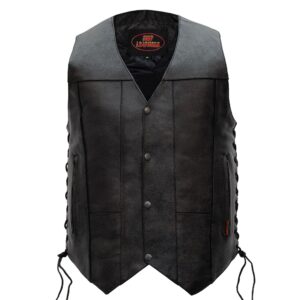
Hot Leathers VSM1015 Men’s Black Heavyweight Leather Vest with Side Laces
Price range: $59.95 through $79.95 Select options This product has multiple variants. The options may be chosen on the product page Compare -
Hot Leathers VSM1017 Men’s Black ’10 Pocket’ Leather Vest with Side Laces
Price range: $69.95 through $89.95 Select options This product has multiple variants. The options may be chosen on the product page Compare -
Hot Leathers VSM1022 Men’s Black ‘Conceal and Carry’ Leather Vest
Price range: $69.95 through $79.95 Select options This product has multiple variants. The options may be chosen on the product page Compare -
Hot Leathers VSM1023 Men’s Black ‘Conceal and Carry Leather Vest
Price range: $89.95 through $99.95 Select options This product has multiple variants. The options may be chosen on the product page Compare -
Hot Leathers VSM1030 Men’s Black ‘Conceal and Carry’ Leather Vest
Price range: $59.95 through $79.95 Select options This product has multiple variants. The options may be chosen on the product page Compare -
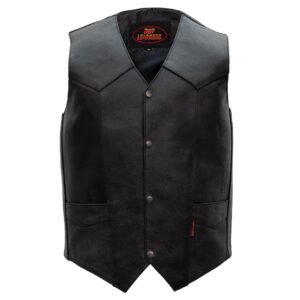
Hot Leathers VSM1032 Men’s Black ‘Classic’ Leather Vest
Price range: $79.95 through $99.95 Select options This product has multiple variants. The options may be chosen on the product page Compare -
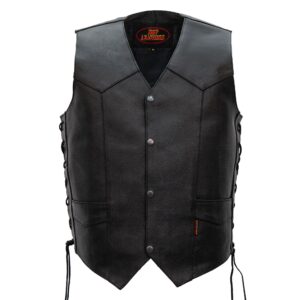
Hot Leathers VSM1033 Men’s Black ‘Classic Side Lace’ Leather Vest
Price range: $89.95 through $109.95 Select options This product has multiple variants. The options may be chosen on the product page Compare -
Hot Leathers VSM1034 Men’s Black ’10 Pocket’ Cowhide Leather Vest
Price range: $109.95 through $129.95 Select options This product has multiple variants. The options may be chosen on the product page Compare -
Hot Leathers VSM1035 Men’s Distressed Brown ‘Conceal and Carry’ Leather Vest
Price range: $149.95 through $159.95 Select options This product has multiple variants. The options may be chosen on the product page Compare -
Hot Leathers VSM1037 Men’s Black ‘Zipper Pockets’ Concealed and Carry Leather Vest
Price range: $169.95 through $179.95 Select options This product has multiple variants. The options may be chosen on the product page Compare -
Hot Leathers VSM1038 Men’s Black ‘Conceal and Carry’ Leather Vest with Side Laces
Price range: $119.95 through $129.95 Select options This product has multiple variants. The options may be chosen on the product page Compare -
Hot Leathers VSM1039 Men’s Black ‘Conceal and Carry’ Leather Vest
Price range: $109.95 through $129.95 Select options This product has multiple variants. The options may be chosen on the product page Compare -
Hot Leathers VSM1040 Men’s Retro Brown ‘Side Lace’ Leather Vest
Price range: $139.95 through $149.95 Select options This product has multiple variants. The options may be chosen on the product page Compare -
Hot Leathers VSM1041 Men’s Rub-Off Grey ‘Side Lace’ Leather Vest
Price range: $159.95 through $169.95 Select options This product has multiple variants. The options may be chosen on the product page Compare -
Hot Leathers VSM1049 Men’s Black ‘Paisley’ Conceal and Carry Leather Vest
Price range: $169.95 through $179.95 Select options This product has multiple variants. The options may be chosen on the product page Compare -
Hot Leathers VSM1051 Men’s Black ‘Celtic Cross’ Conceal and Carry Leather Vest
Price range: $169.95 through $179.95 Select options This product has multiple variants. The options may be chosen on the product page Compare -
Hot Leathers VSM1052 Men’s Black ‘Patriotic’ Conceal and Carry Leather Vest
Price range: $169.95 through $179.95 Select options This product has multiple variants. The options may be chosen on the product page Compare -
Hot Leathers VSM1053 Men’s Black ‘Don’t Tread On Me’ Conceal and Carry Leather Vest
Price range: $169.95 through $179.95 Select options This product has multiple variants. The options may be chosen on the product page Compare -
Hot Leathers VSM1054 Men’s Black ‘Skull Flag’ Conceal and Carry Leather Vest
Price range: $169.95 through $179.95 Select options This product has multiple variants. The options may be chosen on the product page Compare -
Hot Leathers VSM1055 Men’s Black ‘Over The Top Skull’ Conceal and Carry Leather Vest
Price range: $169.95 through $179.95 Select options This product has multiple variants. The options may be chosen on the product page Compare -
Hot Leathers VSM1056 Men’s Black ‘Vintage USA Flag’ Conceal and Carry Leather Vest
Price range: $169.95 through $179.95 Select options This product has multiple variants. The options may be chosen on the product page Compare -
Hot Leathers VSM1057 Men’s Black ‘Mexican Blanket’ Conceal and Carry Leather Vest
Price range: $169.95 through $179.95 Select options This product has multiple variants. The options may be chosen on the product page Compare -
Hot Leathers VSM1058 Men’s Black ‘Camo Flag’ Conceal and Carry Leather Vest
Price range: $169.95 through $179.95 Select options This product has multiple variants. The options may be chosen on the product page Compare -
Hot Leathers VSM1059 Men’s Black ‘Flannel Grey’ Conceal and Carry Leather Vest
Price range: $169.95 through $179.95 Select options This product has multiple variants. The options may be chosen on the product page Compare -
Hot Leathers VSM1060 Men’s Black ‘Flannel Red’ Conceal and Carry Leather Vest
Price range: $169.95 through $179.95 Select options This product has multiple variants. The options may be chosen on the product page Compare -
Hot Leathers VSM1061 Men’s Black ‘Skulls Make Skulls’ Conceal and Carry Side Lace Leather Vest
Price range: $159.95 through $169.95 Select options This product has multiple variants. The options may be chosen on the product page Compare -
Hot Leathers VSM1062 Men’s Black ‘Lone Wolf’ Conceal and Carry Side Lace Leather Vest
Price range: $159.95 through $169.95 Select options This product has multiple variants. The options may be chosen on the product page Compare -
Hot Leathers VSM1063 Men’s Black ‘Blessed’ Conceal and Carry Side Lace Leather Vest
Price range: $159.95 through $169.95 Select options This product has multiple variants. The options may be chosen on the product page Compare -
Hot Leathers VSM1064 Men’s Black ‘Viking Warrior’ Conceal and Carry Side Lace Leather Vest
Price range: $159.95 through $169.95 Select options This product has multiple variants. The options may be chosen on the product page Compare -
Hot Leathers VSM1065 Men’s Black ‘Wooded Eagle’ Conceal and Carry Side Lace Leather Vest
Price range: $159.95 through $169.95 Select options This product has multiple variants. The options may be chosen on the product page Compare -
Hot Leathers VSM1066 Men’s Black ‘V-Twin Eagle’ Conceal and Carry Side Lace Leather Vest
Price range: $159.95 through $169.95 Select options This product has multiple variants. The options may be chosen on the product page Compare -
Hot Leathers VSM2001 Men’s Black ‘Jumbo Skull’ Conceal and Carry Leather Vest
Price range: $139.95 through $149.95 Select options This product has multiple variants. The options may be chosen on the product page Compare -
Hot Leathers VSM2003 Men’s Black ‘Ancient Skulls’ Conceal and Carry Leather Vest
$159.95 Select options This product has multiple variants. The options may be chosen on the product page Compare -
Hot Leathers VSM5001 Men’s USA Made Premium Steerhide Leather Vest with Gun Pocket
Price range: $279.95 through $299.95 Select options This product has multiple variants. The options may be chosen on the product page Compare -
Hot Leathers VSM5003 Men’s USA Made Extra Long Back Premium Steerhide Leather Vest
Price range: $239.95 through $279.95 Select options This product has multiple variants. The options may be chosen on the product page Compare -
Hot Leathers VSM5004 Men’s USA Made Covered Zipper Premium Leather Vest
Price range: $279.95 through $319.95 Select options This product has multiple variants. The options may be chosen on the product page Compare -
Hot Leathers VSM5005 Men’s USA Made Buffalo Nickel Snap Premium Leather Vest
Price range: $229.95 through $259.95 Select options This product has multiple variants. The options may be chosen on the product page Compare -
Hot Leathers VSM5006 Men’s USA Made Classic Premium Leather Vest
Price range: $159.95 through $209.95 Select options This product has multiple variants. The options may be chosen on the product page Compare -
Hot Leathers VSM5008 Men’s USA Made Side Lace Premium Leather Vest
Price range: $179.95 through $239.95 Select options This product has multiple variants. The options may be chosen on the product page Compare -
Hot Leathers VSM5009 Premium USA Made Leather V Neck Zipper Front Vest
Price range: $249.95 through $269.95 Select options This product has multiple variants. The options may be chosen on the product page Compare





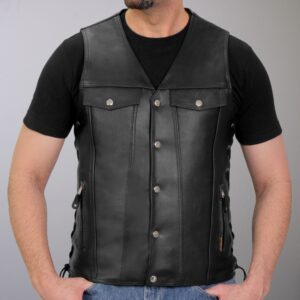
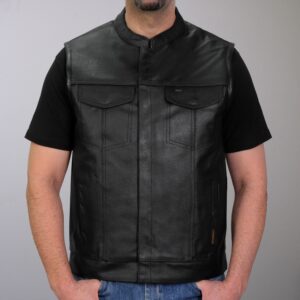
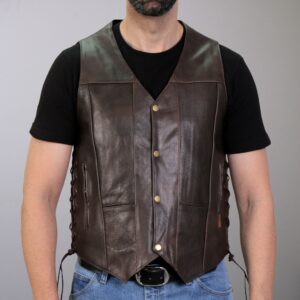
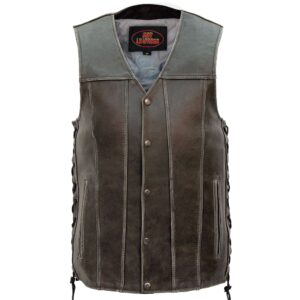


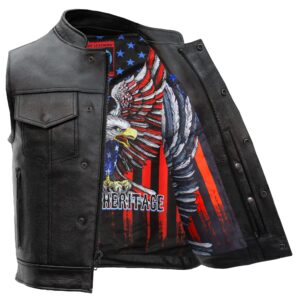


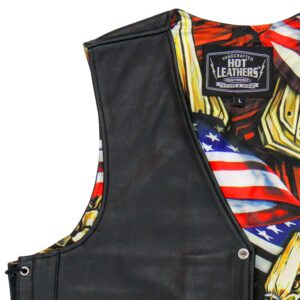


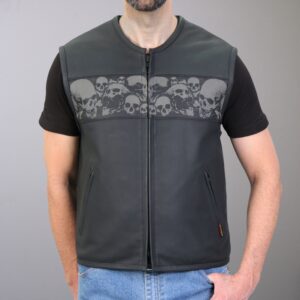
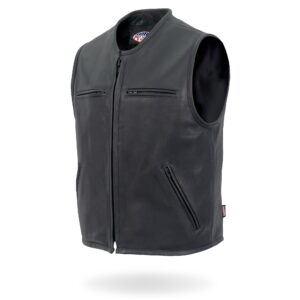


Men's Leather Vests Buying Guide
Few garments work as hard as a leather vest. The same piece can ride a few hundred miles on a Saturday, go over a bare chest at a leather bar that night and layer under a jacket in cold weather. Men's leather vests differ far more than they look at first glance, though, in the hide, the cut, the hardware and the pocket layout, and those details decide whether a vest becomes a favorite or sits in the closet.
Reading the Hide
Cowhide is the workhorse: tough, abrasion resistant and stiff at first, softening over months of wear. Buffalo hide has a more pronounced pebbled grain and a slightly heavier hand. Lambskin and sheepskin drape like fabric and feel soft from day one, but they scuff more easily and are better suited to the bar than the highway.
Pay attention to thickness. Riding vests are usually cut from leather around 1.1 to 1.3 mm, which holds its shape and shrugs off road debris, while lighter fashion leathers under 1 mm move more freely. Top-grain and full-grain hides keep the strong outer surface; split leather is cheaper and less durable, so check the description before you buy.
Cuts and Their Purpose
- Classic motorcycle vest: snap or zip front, shirt-style collar or a clean collarless neck, and enough length to cover the belt when seated on a bike.
- Club-style vest: a plain, unbroken back panel with no seam down the center, which leaves room for patches and rockers.
- Bar vest: cut shorter and closer to the body, often with lacing or open sides, worn without a shirt underneath.
- Western and dress vests: pointed hem, welt pockets and a tailored waist meant to go over a button-down.
Sizing Without the Guesswork
Fitting men's leather vests starts at the chest: measure around its fullest part with arms relaxed, then decide what goes underneath. Over a T-shirt, order your true chest size; over a hoodie or thermal layer, go up one size. Side laces or adjustable buckles at the waist let a vest follow you through seasons and the occasional change in build, which is worth having if you sit between sizes.
Length matters as much as width. On a motorcycle you lean forward, so a vest that looks right standing can ride up and expose the lower back. Look for a back length that reaches the belt line in a riding position, and remember that leather relaxes slightly with wear but never grows a full size.
Pockets, Snaps and Hardware
Interior pockets are the quiet test of quality. Many riding vests now include deep inside pockets on both sides with snap or zip closures, sized for a phone, wallet or registration papers. Check whether the closures are heavy-duty metal snaps or plastic, and whether zippers are a known industrial brand rather than an unnamed light-gauge pull.
Stitching should be tight, even and doubled along stress points such as armholes and pocket corners. Lining is a matter of taste: a mesh or cotton lining feels cooler in summer, while an unlined vest is lighter and molds to your shape sooner.
Where to Look Further
All our men's leather vests sit within the broader Leather Vests range, and the wider Leather Wear section holds jackets, chaps and harnesses that pair with them. Building an outfit from one hide type keeps the grain and sheen consistent from piece to piece.
Caring for Leather Over the Long Haul
Wipe road dust off with a damp cloth after rides and let the vest air dry at room temperature if it gets wet; never put it near a heater or in a dryer, which shrinks and cracks hide. Two or three times a year, work a leather conditioner into the surface to keep it supple, testing first on an inside seam.
Store the vest on a wide, shaped hanger so the shoulders hold their line, and avoid plastic garment bags that trap moisture. A breathable cotton cover is the better choice if it is going into the back of a closet for winter.
Questions About Men's Leather Vests
Can I sew patches onto a leather vest myself? You can, using a leather needle and waxed thread, but a leather-experienced tailor will set patches straighter and keep stitches out of seams that bear load.
Will a new vest stretch? It will relax a little at the chest and armholes, perhaps half an inch, so a vest that is snug but not restrictive on day one is the right fit.
What should I do about a strong leather smell? Hang the vest in open air for a few days; the tannery odor fades on its own, and a coat of conditioner speeds it along.